
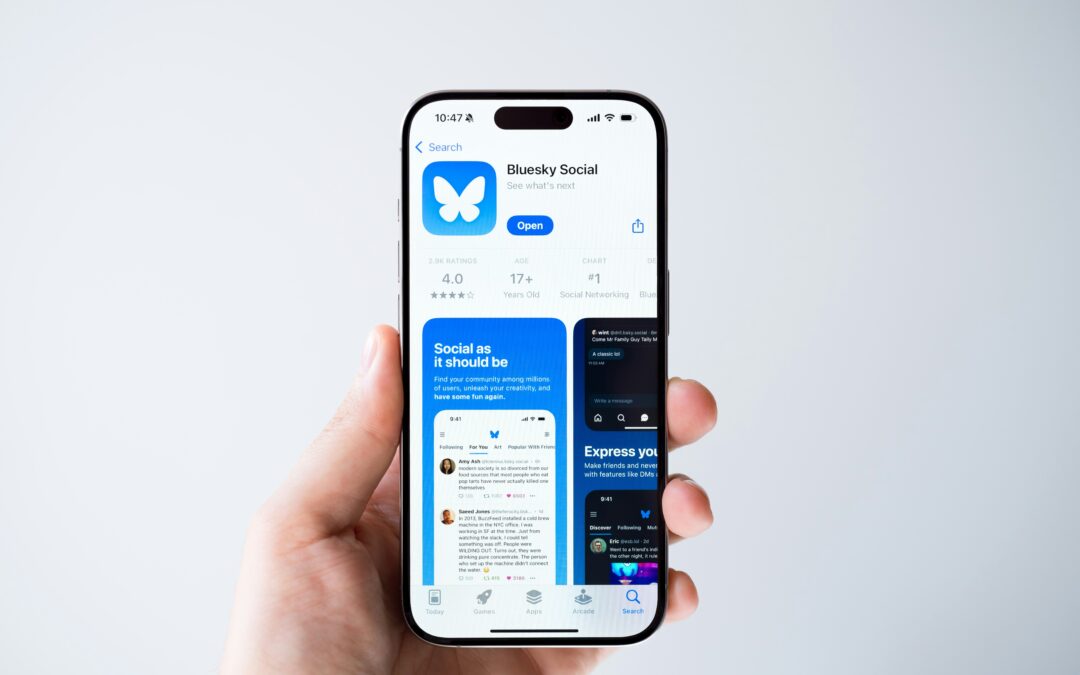
A while ago I confidently wrote a piece about the six essential social media platforms you shouldn’t ignore. As you’ve probably guessed from the title here, I’m now updating that count. The social media landscape doesn’t sit still for long, and one platform in particular has worked its way onto the list of services worth paying genuine attention to. Bluesky has emerged as one of the most interesting bets in social media right now, built on a fundamentally different model from the platforms most of us are used to.
If you haven’t tried it yet, it’s worth understanding what the fuss is actually about, because Bluesky represents a meaningfully different vision of what social media could be.
What makes Bluesky different
Bluesky isn’t just another microblogging clone. It started life as an internal Twitter project back in 2019, became an independent company in 2021, and launched as an invitation-only service in early 2023 before opening fully to the public in February 2024. By the end of 2025 it had grown to over 40 million registered users.
The single most important thing to understand about Bluesky is that it runs on what’s called the AT Protocol (Authenticated Transfer Protocol). That sounds technical, but the practical implications are genuinely interesting.
- Decentralised architecture. Unlike traditional social platforms, Bluesky is designed so that no single company has total control over your social presence. The protocol is open. Other apps can be built on top of it.
- Algorithm transparency. You aren’t bound to a single opaque feed. Users can choose, customise, or build their own algorithmic feeds, with tens of thousands of custom feeds already available across the platform.
- Data portability. Your social identity belongs to you. In principle, you can move your account, your followers, and your history between services built on the same protocol, in a way that simply isn’t possible on the closed networks most of us are used to.
- Stronger content controls. Enhanced moderation tools and labelling systems give users more meaningful control over what they see and how they engage with others.
This is a fundamentally different bet on what social media should look like. The traditional model is that you join a platform, the platform owns your audience, and your data is monetised by the platform. The Bluesky model is that the protocol is open, your identity is portable, and you have far more agency over your experience.
Key features worth knowing about
A few of the practical features that have made Bluesky stand out:
- Custom feeds. You can subscribe to feeds built by other users, or build your own. This is one of the platform’s most distinctive features. Imagine choosing your own algorithm rather than being trapped inside someone else’s.
- Post threading. Familiar to anyone who used Twitter, but with improved readability and navigation.
- Rich media support. Images, video, and other formats supported, with continued development in this area.
- Domain-based identity. Your handle can be tied to your own domain (e.g. @yourname.com), which means your social identity is portable in a way that no traditional platform allows.
Who’s actually on Bluesky
The user base has grown rapidly and now includes a broad mix of people. The largest concentrations are in the United States, Brazil, Japan, and the UK. It tends to skew younger than X, with a significant portion of users between 18 and 24, and it’s earned a particular reputation for serious discourse, including among scientists, journalists, and academics. A 2025 study found that many researchers now consider Bluesky a more effective platform than X for professional networking and outreach, citing the moderation tools, customisable feeds, and reduced algorithmic interference as key advantages.
That said, it’s worth being clear-eyed about the current scale. Around 40 million registered users, but daily active users sit at around 1.5 to 3 million. The platform has built a passionate, engaged audience rather than a mass-market one. Whether that changes over the next year or two is one of the more interesting open questions in social media.
Getting started on Bluesky
If you want to try it, the process is straightforward.
- Sign up at bsky.app. The platform has been open to the public since February 2024, so no invitation needed.
- Set up your profile. Choose your handle, write a short bio, and add a profile picture.
- Start following people. Look for accounts in the topics you care about. Starter packs (curated lists of accounts for new users) are a useful way to find your way in.
- Explore custom feeds. This is one of the most distinctive parts of the platform. Try a few to see which ones match how you want to use it.
- Start posting. Share thoughts, images, links. Engage thoughtfully with what others are saying.
Best practices for Bluesky
The platform has a slightly different culture from the bigger networks, and it’s worth knowing what tends to work.
- Authenticity matters more here. The community is quick to spot and dismiss anything that feels overly promotional or scripted. Talk like a person.
- Engage in real conversations. Replies are valued more than likes or reposts. A post with fifty thoughtful replies will land better than one with a hundred passive likes. Bluesky rewards dialogue.
- Try multiple custom feeds. This is genuinely the most distinctive thing about the platform. Don’t just stick to the default feed.
- Build relationships. Smaller, more engaged audiences are often more valuable than large ones. Focus on connection rather than reach.
- Tailor anything you cross-post. Content from X, Threads, or LinkedIn often doesn’t translate well as-is. A small adjustment for tone makes a real difference.
The bigger picture
Bluesky is part of a broader shift towards decentralised social networks, where no single platform owner controls the entire experience. Whether decentralised platforms can scale to genuine mainstream usage is one of the most interesting open questions in technology right now. The honest answer is that we don’t yet know.
What we do know is that Bluesky has proven there’s real demand for an alternative to the big centralised platforms, and that millions of people, including a significant share of journalists, scientists, and serious thinkers, have been willing to invest time in building a presence somewhere new.
If you’ve felt increasingly uncomfortable with how the bigger platforms have evolved over the last few years, Bluesky may be worth exploring. It isn’t perfect. The user base is still small relative to the giants. The business model is still being figured out. But it represents a fresh perspective on how social media could work, and that alone is worth paying attention to.
You can find me there at @ianmayer.bsky.social.
So as the social media landscape continues to fragment, what is one new platform you’ve been meaning to explore properly, and what’s stopping you from giving it an honest try this month?