
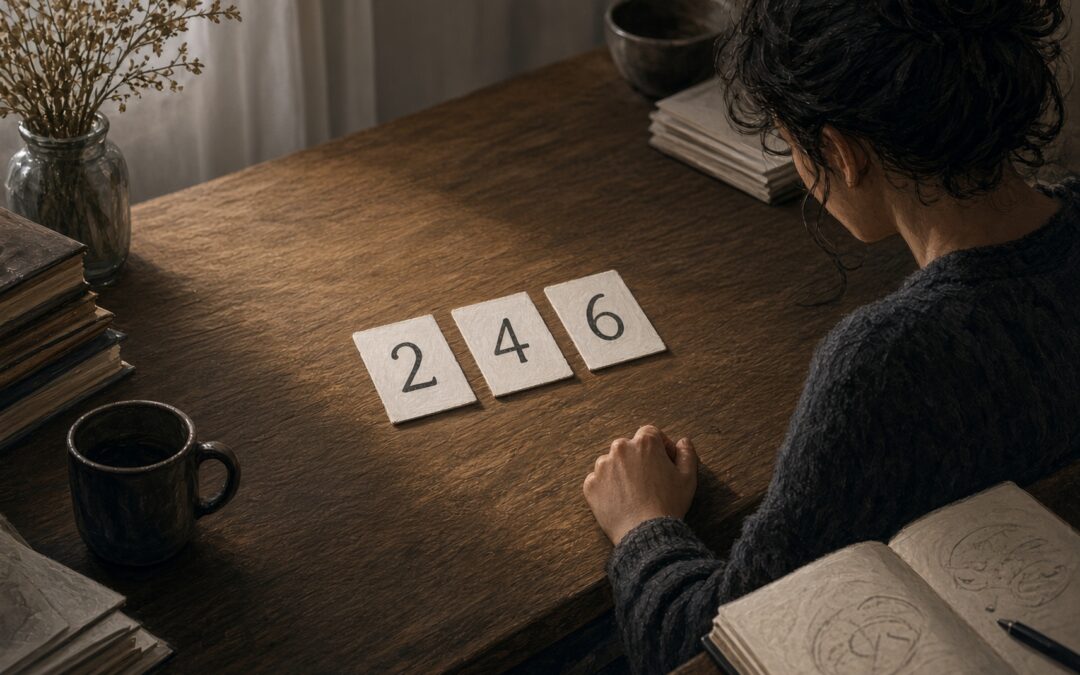
Here’s a simple puzzle. I have a rule for sets of three numbers, and 2, 4, 6 fits it. Your job is to work out the rule. You can test any three numbers you like, and I’ll tell you whether they fit. What would you try first?
About the puzzle
In 1960, the British psychologist Peter Wason gave this puzzle to a group of people. Most of them guessed the rule was “add two each time”. So they tested 8, 10, 12. It fitted. Then 20, 22, 24. That fitted too. Feeling sure of themselves, they gave their answer. They were wrong. Only about one in five people got it right first time.
What’s the rule?
Have a go before you read any further. It only takes a couple of minutes, and the rest of this post will make a lot more sense once you have.
Why we get it wrong
Almost everyone tests numbers they expect to fit. Each “yes” makes them more confident, but none of it teaches them anything new. 8, 10, 12 fits “add two”, but it also fits plenty of other rules.
The way to crack it is to try something you think will fail, like 6, 4, 2 or 1, 2, 100. That’s how you find out where your idea breaks.
Psychologists call this confirmation bias. We go looking for evidence that proves us right, and we skip past anything that might prove us wrong.
We all do it
At work, it looks like asking only the questions that will get the answer we want. Online, it’s following people who already agree with us. Organisations fall into it by counting the people who stayed and forgetting the ones who quietly left. And we do it to ourselves. Once we’ve decided we’re no good at something, every setback seems to prove the point.
Three simple habits
- Ask “what if I’m wrong?” Before you make a decision, ask what you’d expect to see if your idea were mistaken, then go and look for it. If you think a new service is working, don’t just count the people who use it. Find the ones who tried it once and never came back, and ask them why. You’ll learn more from them than from a room full of fans.
- Invite someone to disagree. Most of us are surrounded by people who are too polite, or too busy, to tell us we’re wrong. So ask directly. Pick one person you trust and say, “I’d like you to argue against this.” Make it clear you won’t be offended, and thank them when they do. In team meetings, you could even give one person the job of asking the awkward questions.
- Test the edges. When something seems to work, don’t stop there. Look for where it doesn’t. Try it with a different group, at a different time, or in a different setting. A plan that only works in perfect conditions isn’t much of a plan, and it’s where things start to wobble that you find out what’s really going on.
Iron sharpens iron
None of this is comfortable. It takes humility to go looking for our own mistakes. But as the Bible puts it, “As iron sharpens iron, so one person sharpens another” (Proverbs 27:17). Sharpening involves friction, and the people who challenge us are often the ones who help us most.
So here’s my question for you: What belief do you hold right now that you’ve only ever tested with a sequence you knew would fit?