
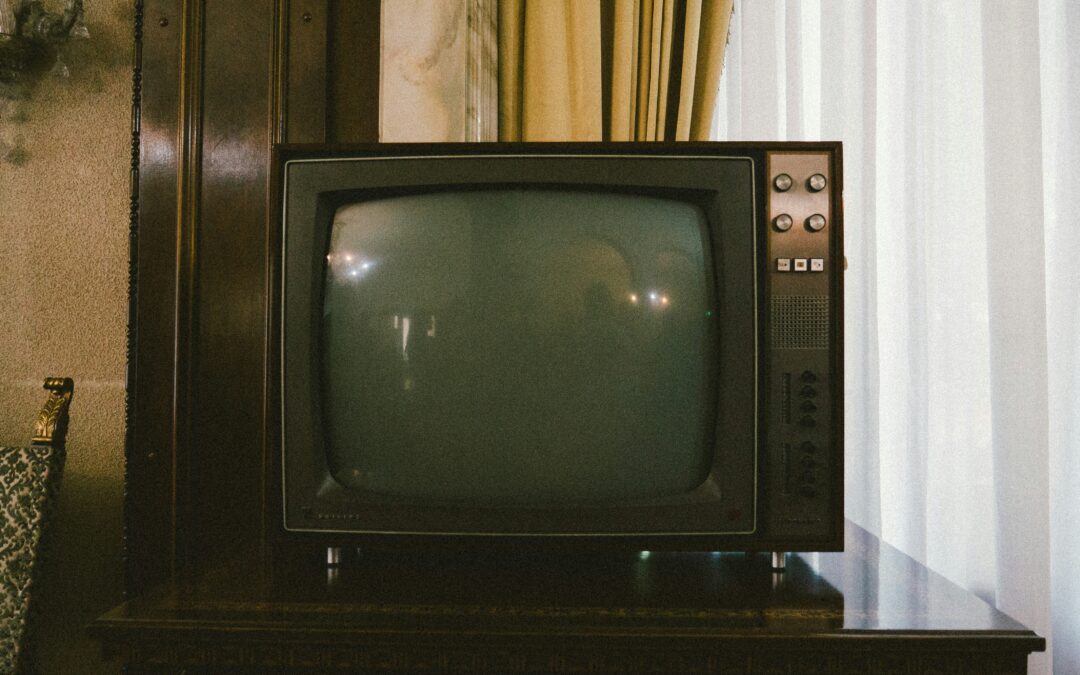
There’s a moment from my childhood I’ve never forgotten. I was about nine, and my family rented our first colour television set from Radio Rentals. Hardly anyone bought a set outright back then. They were expensive and unreliable, so you rented, and when colour broadcasting arrived on BBC1 and ITV on 15 November 1969, the rental shops did a roaring trade. I remember the day ours was delivered, and the first time the screen flickered into colour. The world on it changed completely.
The strange thing is, I hadn’t known anything was missing. Black and white had been the whole world. The grass was a shade of grey, faces were grey, the sky was grey. It all looked perfectly normal because it was all I’d ever seen. Only when the colour arrived did I understand what I’d been looking at all along: a flattened version of something far richer.
I’ve thought about that moment many times since, because it isn’t really about televisions at all.
The greyscale we settle for
A great deal of life is lived in black and white without us realising it. We move through our days, our work, our relationships, our routines, and they look perfectly normal. We don’t sense anything missing, because the muted version is all we’ve known. We grow used to the grey and we call it ordinary.
But the colour is there. It always was. We’ve simply stopped noticing it, or never tuned in to it in the first place. The conversation we rush through that could have been a real connection. The walk we take with our eyes on the pavement instead of the sky. The meal eaten standing at the counter while our mind is elsewhere. None of these things are wrong. They’re just grey, when they could have been vivid.
There’s a line in the Psalms that captures it well. This is the day the Lord has made; let us rejoice and be glad in it (Psalm 118:24). Not some future day, polished and perfect. This one, the ordinary day, the day in front of us. The colour is in the day we already have.
Tuning in
The shift from grey to colour wasn’t gradual for me as a boy. It was sudden, and it came from outside. A van pulled up and delivered it. But living in colour as an adult works the other way round. Nobody is going to rent us a better set. The richness has to be noticed, chosen, paid attention to.
Here are three ways I try to do that.
Slow down enough to see. Colour gets lost at speed. When everything is a blur of tasks and screens and half-listened conversations, the detail disappears. Stopping, even for thirty seconds, lets the colour come back into focus.
Pay attention to the ordinary. The vividness isn’t usually in the big events. It’s in the everyday, the cup of tea, the familiar face, the same view from the same window seen properly for once. Treat the ordinary as worth looking at, and it starts to glow.
Be present with people. The richest colour of all is other people, fully attended to. Half a conversation while checking a phone is greyscale. A whole one, eye to eye, is the full spectrum.
There’s another verse that has always struck me here. Jesus said, I have come that they may have life, and have it to the full (John 10:10). Not life in monochrome. Life in full colour. I take that to mean God never intended the grey version for us. The richness is the point, not the exception.
Seeing it again
What in your life have you stopped seeing in colour? Where have you grown so used to the grey that you’ve forgotten there was ever anything more? Maybe the invitation now is simply to notice, to pay attention to one ordinary thing and let it become vivid again.
We rented that television set decades ago, and the picture has long since faded from the screen. But the lesson stayed. The world was never grey. We just need to tune in.
What would it take for you to see this week in colour?