
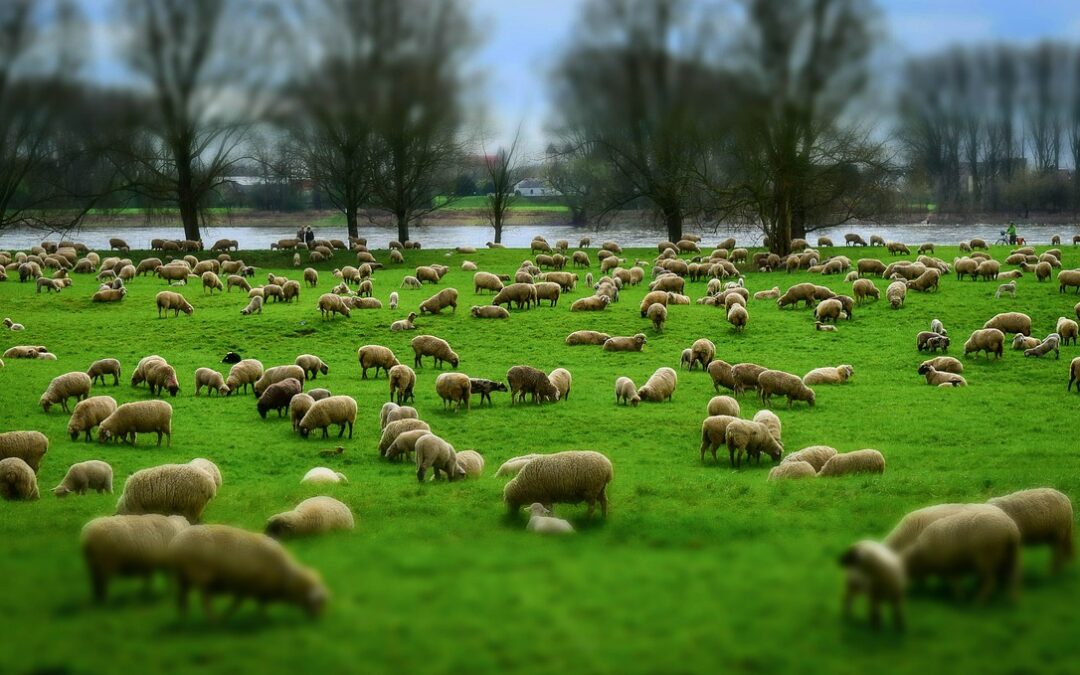
“While shepherds watched their flocks by night, all seated on the ground…” It’s a carol most of us could sing without thinking, even if we haven’t been near a church in years. The melody is so familiar that we sometimes forget there’s an actual story underneath, and the story is genuinely strange.
The full account is in Luke 2, just twelve verses, but a lot happens. A group of working men on a night shift get visited by an angel, then by a sky full of them. They go to find a baby. They tell anyone who’ll listen. Then they go back to work.
That last bit is what stays with me.
These weren’t important people. Shepherds in first-century Palestine were near the bottom of the social pile. Rough trade. Not the people you’d expect God to brief first about something this big. And yet that’s exactly who got the announcement. Not the priests. Not the politicians. Some men in a field.
There’s a lot to learn from how they handled it.
1. Be ready for the extraordinary in the middle of the ordinary
The shepherds weren’t praying. They weren’t on a spiritual retreat. They were doing their job. Watching sheep, probably grumbling about the cold, halfway through a long shift.
That’s where the angel showed up.
Most of us are waiting for the right moment to be open to something extraordinary. The shepherds remind us that the right moment is usually whichever one we’re already in. Something significant might happen on a Tuesday afternoon between meetings. Stay alert.
2. Push through the fear before you decide what’s true
The angel’s first words are “don’t be afraid”. That’s a clue. The shepherds were terrified. Whatever extraordinary thing arrives in your life rarely shows up looking like the version you imagined. It usually arrives wrapped in some version of fear, and the temptation is to back away from it before you’ve heard what it’s actually saying.
Daily interruptions can be irritating. Some of them can also reshape your future. Worth listening before you dismiss.
3. Hearing isn’t the same as moving
The shepherds didn’t just receive the message. They acted on it. “Let’s go to Bethlehem and see this thing.” Without that decision, the story stops in the field.
A lot of us are good at receiving messages. Sermons, books, courses, conversations with wise people. We collect insight. The shepherds remind us that insight you don’t act on quietly evaporates. The small step is what unlocks the next one.
4. Don’t go alone
Notice they went together. None of them tried to make it a solo pilgrimage. They went as a group, processed it as a group, told other people as a group.
We’re built for company on the journey, not just at the destination. Whatever you’re walking towards right now, find people to walk with. You’ll get further, and you’ll enjoy the walk more.
5. Follow what you’ve been given
The angel gave them specific instructions about what to look for. A baby. Wrapped in cloth. Lying in a manger. They didn’t improvise the search. They followed the instructions.
In the heat of the moment we often forget what we’ve been told and start improvising. The shepherds did the unglamorous thing of doing exactly what they’d been asked to do.
6. Don’t forget to give thanks
After they’d seen the baby, they didn’t just walk away. They glorified and praised God on the way out. Gratitude was woven through the whole thing.
Most of us only notice the size of a moment after it’s gone. Giving thanks in the middle of it is harder, and more important. It anchors you in what’s happening rather than always reaching for what’s next.
7. Go back to the fields
This is the line that hits hardest. After all of it, the angels, the singing sky, the baby in the manger, the encounter that would have changed anyone, they went back to their sheep.
They didn’t try to monetise the experience. They didn’t set up a ministry. They didn’t decide they were now too important for shepherding. They returned to their ordinary lives, presumably changed, but still ordinary.
Whatever extraordinary thing happens to you, the test of whether it was real is usually how you handle the ordinary afterwards.
So which of those seven feels like the one you most need to hear right now, and what would change if you actually took it seriously?